Monthly Archives: December 2009

New Yamaha Slim Sound Bar And Sub-Integrated Receiver

Hot Hardware: Yamaha has been beefing up its home audio line here in the fourth quarter of 2009, and with CES in just a few weeks, it seems as if the company is looking to get a jump on everyone else.

Today, it has revealed its newest two-piece home theater package, which should fit perfectly in cramped studio apartments and in living rooms where space is at a premium.

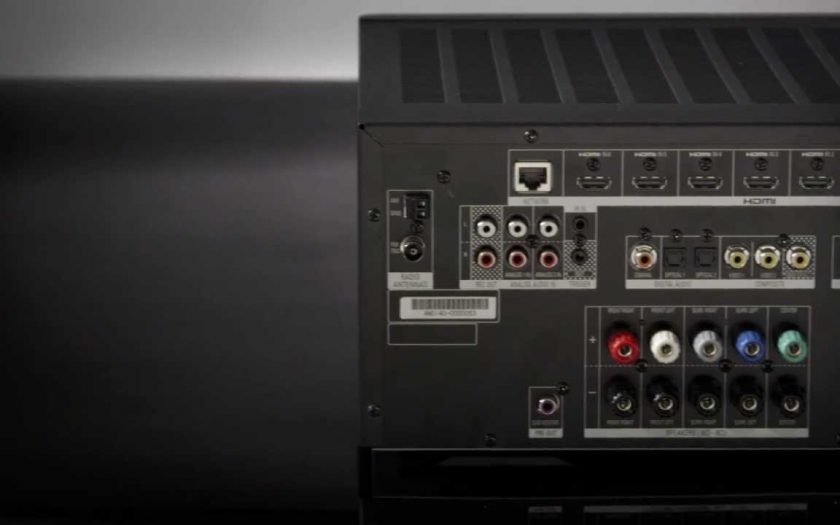
The YHT-S400 combines a super-slim sound bar with a subwoofer-integrated receiver, the latter of which looks nothing like anything we’ve ever seen.

Yamaha Soundbar

The kit provides HD Audio compatibility three 1080p-compatible HDMI inputs (and one output), the company’s exclusive AIR SURROUND XTREME, UniVolume and Extended Stereo technologies for immersive audio for movies, sports and music experiences.

The sound bar stands just 2″ high and can easily fit in front of most modern HDTVs, and it even supports the YDS-11 universal iPod dock and YBA-10 Bluetooth wireless audio receiver to stream A2DP audio from Bluetooth-enabled mobile phones, PCs and Macs. It’s available now for $599.95 (€417).

read more

San Francisco considers displaying phone radiation levels next to price tag

Engadget: If the San Francisco Department of the Environment gets its way, starting as soon as next month Bay Area residents might start noticing the radiation levels of cellphones displayed prominently next to their respective price at retail outlets.

This is, of course, despite no definitive research that the handsets cause harm and the FCC’s insistence that the devices sold to consumers are safe.

The proposal is being endorsed by Mayor Gavin Newsom, who as it’s noted is not about to stop using his iPhone anytime soon. Not to worry, Maine, you’ll still keep the top spot for most ridiculous cellphone warning label.

Cellphone warning label

read more

HDMI 1.4 standard to support broadcast 3D video

Electronista: HDMI Licensing, the group behind the media interface specification, has announced plans to support 3D content with the upcoming HDMI spec v1.4.

The consortium will meet in January to add the “Top/Bottom” 3D format.

The group acknowledges the lack of a mandatory 3D broadcast format, leaving the standard open for further additions or modifications. HDMI 1.4 establishes protocols for several 3D display technologies including frame, line, or field alternative methods; side by side display, and 2D plus depth methods.

The new specification also features data as an essential feature, with a dedicated pipe for 100Mbps Ethernet connections. An Audio Return Channel is designed to send compressed sound through intermediary devices, while a proposed micro HDMI connector will support 1080p video for small devices.

HDMI 1.4-equipped devices are expected to be launched early in January at the 2010 Consumer Electronics Show in Las Vegas.

read more

Project Canvas given green light by BBC Trust

BBC: The BBC Trust, the corporation’s governing body, has given a provisional go-ahead for a project which could kick-start demand for internet TV.

Project Canvas is a partnership between the BBC, ITV, BT, Five, Channel 4 and TalkTalk to develop a so-called Internet Protocol Television standard.

It would see a range of set-top boxes available to access on-demand TV services such as iPlayer and ITVplayer.

Set-top boxes, expected to cost around £200, could be available next year.

The Trust reached its provisional conclusions following more than 800 written responses. It is proposing some conditions on the BBC’s participation in the venture and will have a further period of consultation, lasting until February.

The Trust ruled that Canvas would have a series of positive impacts, including furthering the growth of on-demand TV and increasing the opportunities for internet service providers to develop so called triple play – phone/TV/broadband – services.

read more

3D Blu-ray will be backwards compatible

Wired: The Blu-ray Disc Association (BDA) has announced the final specification for 3D versions of Blu-ray, and there’s good news for PS3 owners and those of us with large collections of 2D Blu-rays.

3D discs will deliver full HD (i.e. 1080p) resolution to each eye, and will do so using a codec supported by all current Blu-ray players. That means that the new discs will be backwards compatible – you’ll be able to play 3D discs in 2D Blu-ray players and still get 1080p resolution.

Film buffs who have upgraded their collection from the non-compatible DVD to Blu-ray disc will therefore not face another expensive upgrade in the near future.

Sony has now confirmed that 2D discs will also work in 3D Blu-ray players. The announcement brought good news for gamers too, confirming that 3D Blu-ray content will be compatible with the Sony PlayStation 3.

The Blu-ray Association has already stated that 3D Blu-ray products will play on any compatible 3D screen, whether LCD, plasma or something else.

Along with the 3D film content, the specification will allow content providers to create 3D graphic menus and 3D subtitles. The complete spec will now be available to manufacturers and content providers, so we can expect an array of 3D Blu-ray announcements next year.

3D Blu-ray

read more

Mobile device numbers to double by 2014

Electronista: The number of mobile devices shipped each year should roughly double within five years, ABI Research says in a new estimate.

In addition to determining that about 1.2 billion phones, media players, modems and netbooks will have shipped year, the analyst group predicts that these numbers will jump to 2.25 billion by 2014.

The leap is believed to come on the back of growth in every other area besides cellphones. Despite the seeming popularity of smartphones, the entire sector is believed saturated enough that it will grow at only about 4 percent.

Modems, such as 3G adapters, should grow at about 40 percent each year while “ultra mobile devices” like media players and mobile Internet devices (MIDs) will grow as much as 67 percent every year.

These devices have a small share now but may catch up as cellular carriers shift towards non-traditional data plans. Many providers, including most North American carriers, now often subsidize netbooks and are expected to provide similar treatment for tablet devices

read more

LG announces “world’s thinnest” 42-inch LCD panel

Electronista: We’re gearing up for CES 2010, which means the race to show off an even thinner “worlds thinnest” LCD TV panel is heating up — and it looks like LG’s taking an early lead by announcing a new 42-inch 1080p panel that’s just 2.6mm (.1 inch) thin.

The prototype LED-backlit 120Hz display weighs just under 8.8 pounds , but we don’t have any other specs on it just yet — but we’re sure we’ll find out far more 17 days from now in Vegas.

LG Thin LCD

read more

Bluetooth group adopts low-energy standard

Electronista: The Bluetooth Special Interest Group this afternoon formally adopted the Bluetooth low energy standard.

The technology is designed to let devices consume as little power as possible by using very short bursts of data and, when in the mode, running at a peak 1Mbps.

While slow, the standard is efficient enough that a device with watch batteries could run its wireless signal for “years” before it needs a replacement.

The new Bluetooth implementation also has roughly as good or better performance than the current full-power technique. It still has low latency and can extend its range to as far as about 328 feet, or ten times what Bluetooth normally uses.

Uses for the technology are broad and can vary from devices that need simple short-range communication, such as a sports pedometer, to computers and wireless syncing with phones and other handhelds.

Alerts and contacts could be quietly sent to a device, for example. Low-energy Bluetooth is officially part of the as yet unfinished Bluetooth 4.0 specification but can be implemented on top of either Bluetooth 2.1 or upcoming 3.0 devices, which with Wi-Fi could use Bluetooth to discover other devices in the same range as the Wi-Fi link.

Nokia is one of the key proponents but will be just one of many companies using the approach.

read more

Hitachi May Need Still More Funds

JCNNetwork: Hitachi Ltd. may need more funds to finance a revamp after selling a record 350.7 billion yen (US$3.9 billion) in stock and bonds.

Hitachi needs money to finance factory closures and job cuts to focus on growing businesses such as trains and medical systems.

Hitachi aims to reverse a multi-decade strategy of expanding into everything from televisions to vacuum cleaners and nuclear reactors after reporting a record loss for a Japanese manufacturer last fiscal year.

The company will reduce about 200 units, merge its unprofitable chip subsidiary with a rival and relocate workers in its plasma-display and automotive units to cut 260 billion yen (US$2.9 billion) in costs this year.

read more

2011 Audi A8 packs optional EDGE, Google Earth

Engadget: We’re guessing it won’t be the tipping point that finally convinces you to buy an Audi A8, but it looks like those in the market for the car will be able to add a nice little option to the 2011 model: a built-in nav system complete with Google Earth and a GPRS / EDGE modem.

Audi Edge

Yeah, so it’s not 3G, but it is apparently the first time that Google Earth has been made available in a production vehicle, which certainly counts for something.

In addition to serving up various Google-sourced points of interest, that modem will also let you download a range of other up-to-date information to the nav unit, although it’s not clear exactly what that will entail. No word on how much it’ll add to the cost of the A8, but it looks like it won’t be available right when the car rolls out early next year — Audi is only saying “mid 2010″ at the moment.

Update: As some commenters have helpfully noted, it seems that while the A8 won’t initially roll out with 3G, it will be getting a UMTS modem in mid 2010, which should provide the bandwidth necessary for Google Earth and allow for simultaneous voice and data connections.

read more

Belkin makes Bluetooth Music Receiver for stereos

Belkin Bluetooth AdapteriPodNN: Belkin today added a Bluetooth Music Receiver to its lineup for short-range wireless streaming.

The adapter takes audio from any Bluetooth device that supports the A2DP stereo format, including many cellphones (such as the iPhone) as well as portable media players that recognize the standard, such as the second- and third-generation iPod touch.

Range is limited to the Bluetooth standard’s 33 feet but should be enough for wireless music in the same room.

The accessory maker bundles the receiver with cables to plug it either into a 3.5mm jack, such as on computer speakers or an aux-in jack, as well as an RCA connector for full-size home stereo components.

Belkin is shipping the adapter to the US today for $50 (€34) and hopes to ship it to most other parts of the world in March.

read more

JVC intros iPod dock with Dolby Virtual Surround

iPodNN: JVC on Wednesday introduced a new iPod dock with built-in speakers that has a unique wraparound design and supports virtual Dolby surround sound.

The XS-SR3 can hold iPods and iPhones either horizontally or vertically, depending on whether the user wants to listen to music or watch videos.

JVC iPod Speaker System

Four clips are included to hold different models of iPods. The speakers output 5W of power through neodymium magnets.

The dock can also play music from other sources through both analog and optical input. A remote control is included. JVC ships the XS-SR3 later in December for $150 (€102).

read more

top